David Pinkerton
Systems thinking applied to servers, sats, and sets.
My home server runs a local LLM and self-hosted CI runners on the same two-core CPU. The model was making CI up to 95% slower, and cpu_shares couldn’t fix it. A 40-line watcher that freezes the model whenever a CI job is running did.
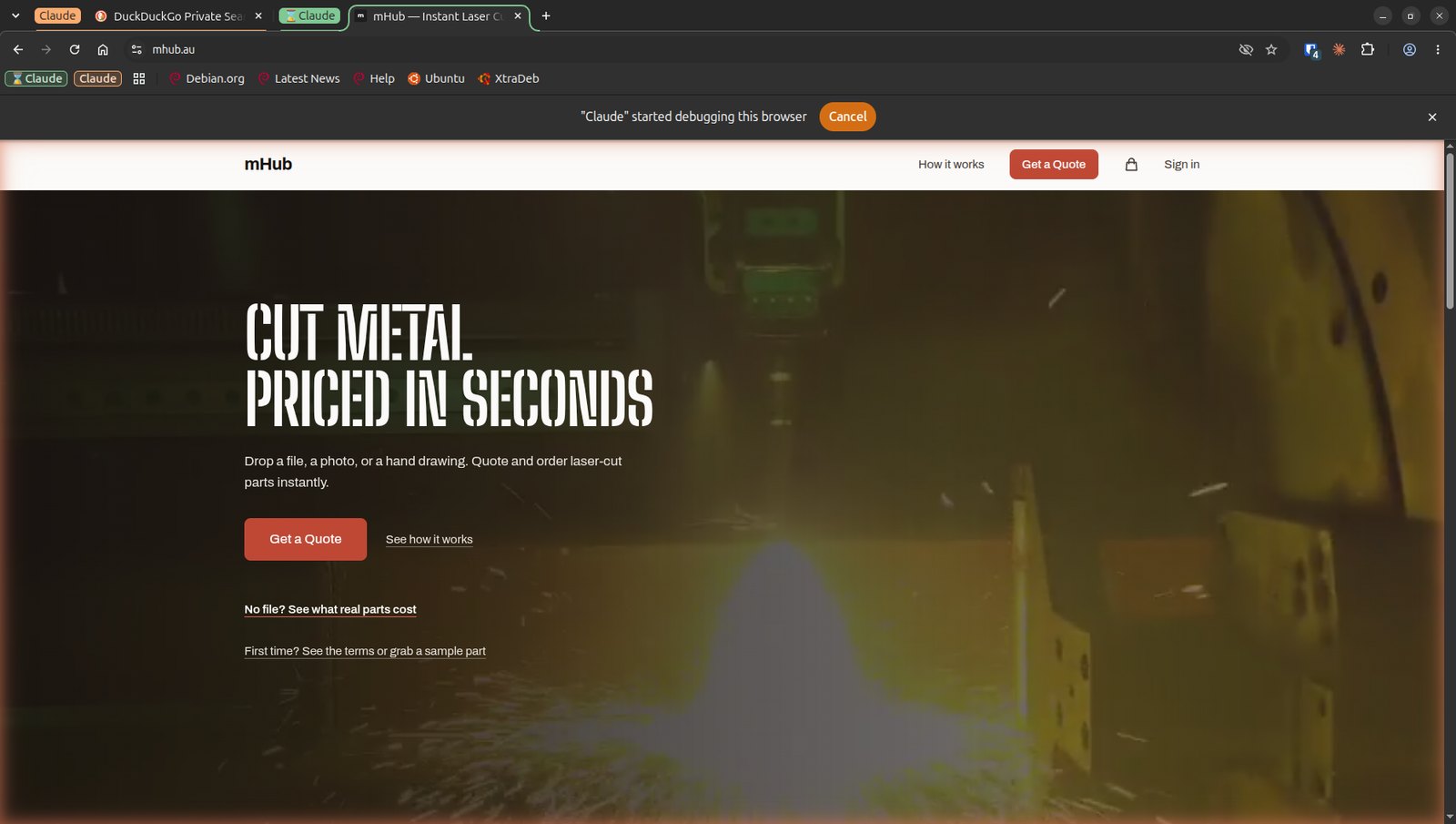
I keep the Claude browser extension in Chromium, a browser I use for nothing else, and out of Firefox where my own life is signed in. Here’s why, the two things that tripped me up on Linux, and the setup that works.
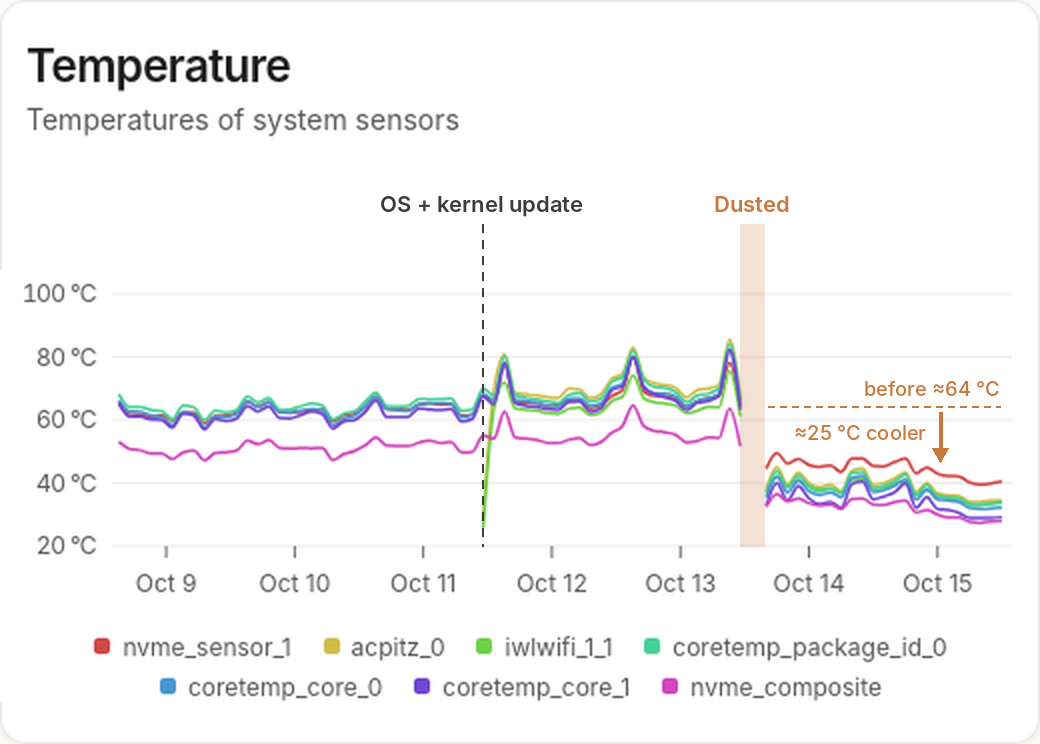
Tracking metrics of my machines with Beszel prompted some spring cleaning that dropped my home server’s temperatures by about 25 °C.
Some of our DC-hosted services would intermittently lose the ability to reach their own public URLs. A webhook from one internal service to another would hang. A health probe would time out. The logs at both ends showed nothing useful. It was always specific source/destination pairs. The VPS was reachable from the internet fine. From other parts of our network, fine. From most laptops, fine. From this DC host to that VPS’s public IP, TCP just timed out. No RST. Silent. ...
ZEUS published a report this month called Lightning Economics: The Bridge Between Bitcoin’s Two Identities. The summary line that stopped me: “Professionally managed operators report 5-6% gross annualised returns.” ZEUS’s own routing node, Olympus, delivers a 5.58% gross ROIC on its routing-allocated capital over the trailing twelve months — broken down as 8.62 bps effective fee rate × 64.7x capital velocity. The report’s most useful framing: static capital bias. Most analysts model Lightning as a static yield instrument, look at thin per-transaction fees, and conclude the returns are tiny. They miss that the same capital cycles through productive use dozens of times a year. As the report puts it: ...
My father turns 80 in August. He’s had an interesting life and most of the detail only lives in his head. This is the story of what I’m building for him, and how it turned into something wider.
Storyworth and prompted memoir journals delegate the whole book to one person in isolation. That’s why they stall. Stories are social — they want an audience, not a worksheet.
A dead man’s switch triggers actions if you stop responding. The existing ones — Aeterna, LastSignal — require periodic manual check-ins. That works. But Nostr already has a better signal: every post, reaction, zap, and repost is a cryptographically signed event tied to your public key. Your normal usage is proof of life. I built nostr-dead-man-switch to use that signal. It subscribes to relays, watches for any event from my npub, and resets its timer on activity. If I go quiet for long enough and don’t respond to warning DMs, it fires off emails, webhooks, or Nostr notes to the people who need to know. ...
A month ago I wrote about building a self-hosted memory layer for Claude Code. The system has been running continuously since then — 194 memories stored, mostly from Claude Code sessions across a dozen projects. This post covers what I learned from actual usage and the changes I made as a result. What Changed After Real Use The original system worked. Search found relevant memories, AI metadata extraction added useful structure, and the mobile capture form let me save thoughts from my phone. But a month of daily use exposed friction points that weren’t obvious during initial development. ...
Patrick Moore’s 2021 book Fake Invisible Catastrophes and Threats of Doom makes a simple observation: most modern scare stories are built on phenomena that are either invisible, remote, or both. CO2. Radiation. Ocean acidification. Coral bleaching in reefs you’ll never visit. The average person can’t observe or verify any of it firsthand. They have to trust activists, media, politicians, and scientists — all of whom have financial or political skin in the game — to tell them the truth. ...